


Executive Brief
Understanding GST/HST Registration for Small Businesses in Canada
If you're a small business owner in Canada, understanding GST/HST registration is crucial. As of [current year], registering for GST (Goods and Services Tax) and HST (Harmonized Sales Tax) becomes mandatory when your business's annual revenue surpasses $30,000. This threshold, known as the small supplier threshold, is a critical point for small businesses to monitor closely.
Why Register?
Registration isn't merely a compliance obligation; it's a strategic decision. If you register, you are required to collect GST/HST on taxable supplies, which can then be offset by input tax credits (ITCs) for tax paid on business expenses. This can improve cash flow and optimize your financial management.
When to Register for HST?
The decision to register should occur as soon as you anticipate crossing the small supplier threshold. This foresight helps in avoiding potential penalties and operational disruptions. If your revenues exceed the $30,000 mark in a single quarter or over four consecutive quarters, registration is mandatory.
How to Register
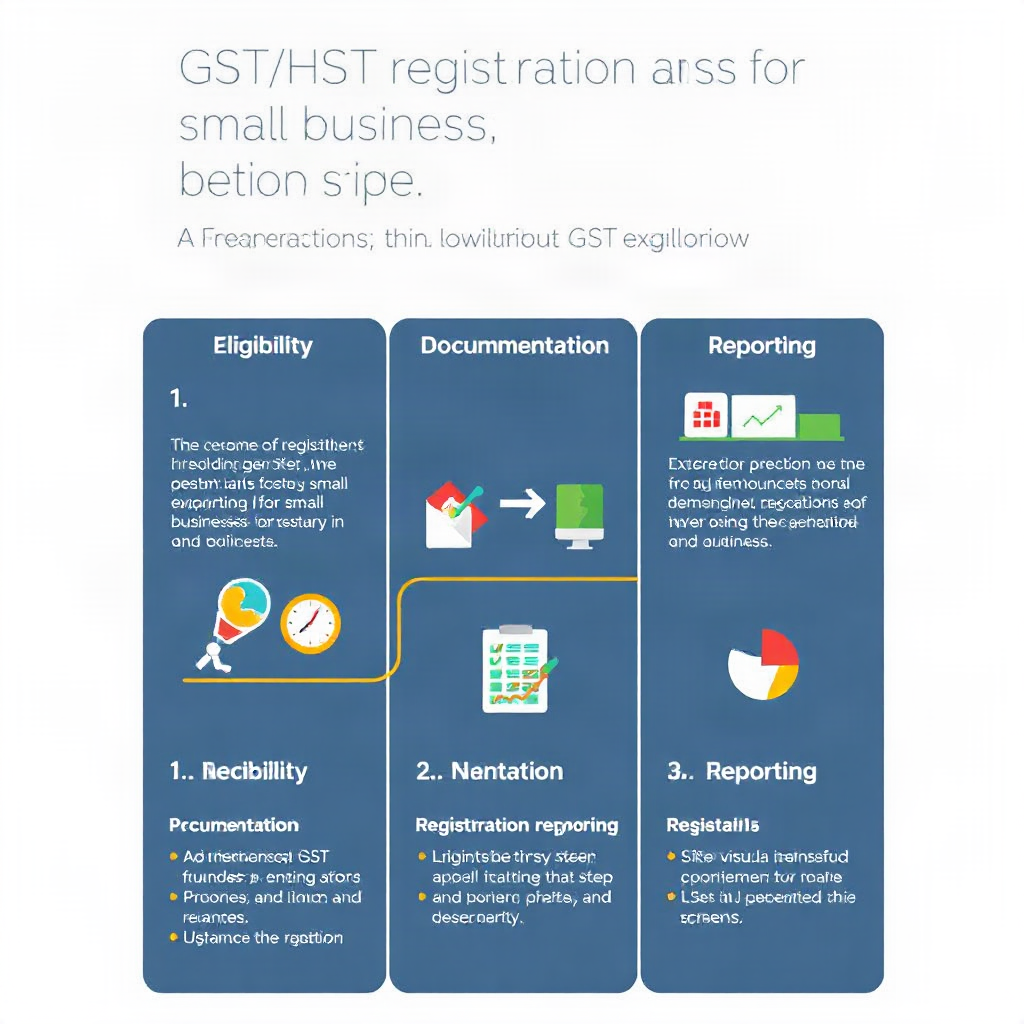
- Assess Eligibility
- Confirm that your business type and structure require GST/HST registration.
- Prepare Documentation
- Gather necessary information such as business number, anticipated revenue, and business structure.
- Complete Registration
- Apply for registration through the Canada Revenue Agency (CRA) website.
- Regular Reporting
- Prepare to comply with regular GST/HST reporting as per your business cycle, whether quarterly or annually.
Cost Implications
While registration itself is free, the real costs come in the form of administrative responsibilities for collecting and remitting taxes. Staying compliant is crucial to avoid penalties.
Practical Tips for Newcomers
-
Monitor Revenues Closely: Implement systems to track revenue accurately against the small supplier threshold.
-
Leverage Technology: Use accounting software to automate GST/HST calculations and submissions.
-
Seek Mentorship: Consider exploring Ashavid’s one-on-one mentorship to gain personalized advice tailored to your business context.
What’s Next?
Crossing the registration threshold signifies a pivotal stage in business maturity. As your company grows, consider partnering with expert advisors to navigate complexities of Canadian business operations, ensuring strategic alignment and compliance.
Explore our programs to see how Ashavid can assist you through this transition. If you're uncertain about the precise steps, book a strategy session with us to receive customized support.
While GST/HST registration might appear bureaucratic, it can actually sharpen your business operations by instilling a forward-thinking approach to financial management. Organizations like Ashavid can offer practical support, smoothing your path to successful business execution in Canada.
Remember, as you embark on the GST/HST registration process, you're not merely fulfilling a regulatory duty—you're enhancing your business's operational foundation. Choose wisely, and let us support you in achieving sustained success.

Ashavid Admin
ADMIN
Expert analysis on digital transformation and global mobility strategies. Committed to engineering future-ready businesses.
Frequently Asked Questions
Q1What is the GST/HST small supplier threshold in Canada?+−
As of [current year], the small supplier threshold in Canada is an annual revenue of $30,000. Once exceeded, GST/HST registration becomes mandatory.
Q2When do I need to register for GST/HST as a small business owner?+−
You must register for GST/HST when your total taxable revenues exceed $30,000 over four consecutive quarters or in a single quarter.
Q3How does GST/HST registration benefit my business?+−
Registering for GST/HST allows you to collect taxes from customers, potentially offset by input tax credits, improving your business's cash flow management.
Q4What happens if my business doesn't register for GST/HST on time?+−
Failing to register on time could lead to CRA penalties and an obligation to remit taxes retrospectively, impacting cash flow and operations.
Have a question about this article?
Use the article chat assistant in the bottom-right corner to ask questions, get a quick summary, or explore any point discussed in this article.