



Executive Brief
Key Alternatives to Canada's Startup Visa in 2026
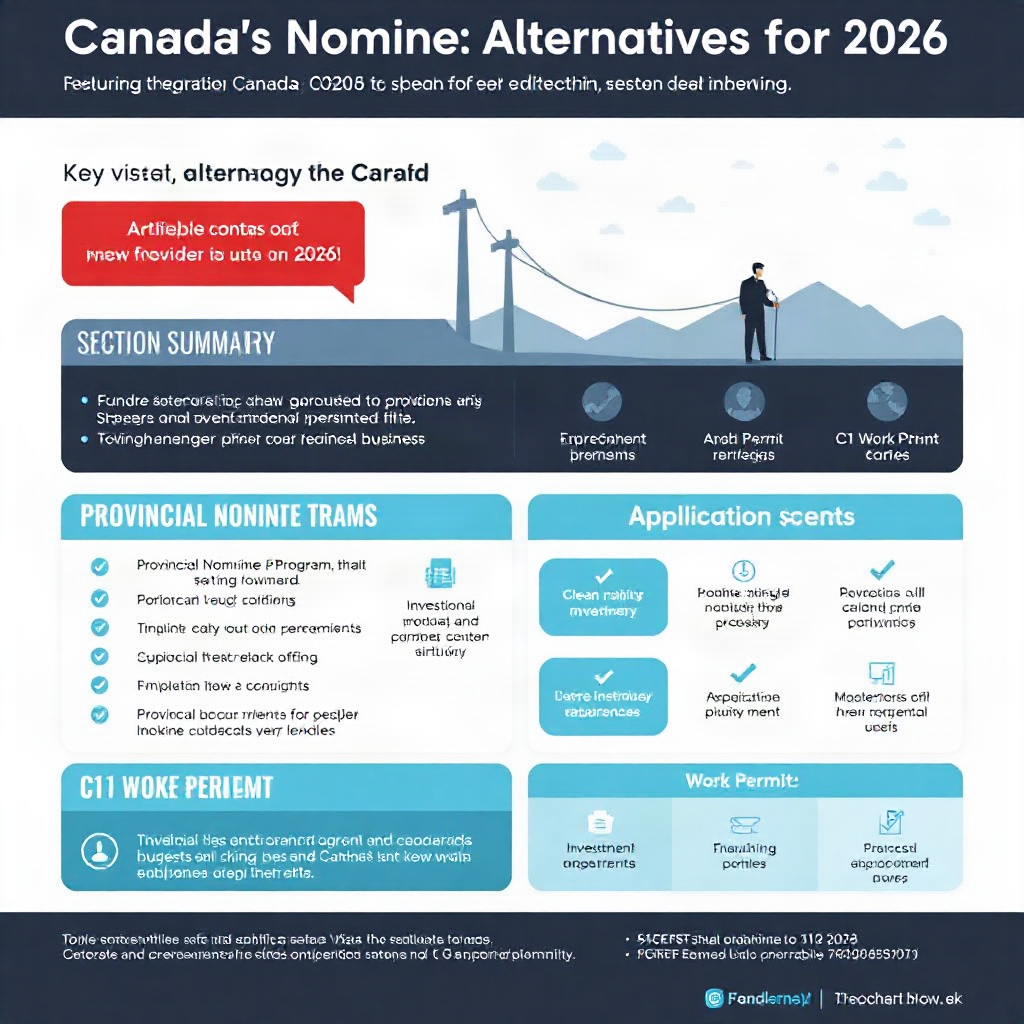
As of 2026, the Canadian Start-Up Visa program remains a popular gateway for global entrepreneurs but comes with significant waiting periods and potential closure. Fortunately, alternatives exist for those seeking immediate entry into Canada's business ecosystem.
1. Provincial Nominee Program (PNP) Entrepreneur Streams
PNPs have emerged as credible substitutes for the Start-Up Visa. Each province offers unique entrepreneur streams that cater to founders looking for localized opportunities. These streams often have:
-
Investment Requirements: Varying amounts based on province, ranging from CAD 200,000 to 600,000.
-
Net Worth Criteria: Generally between CAD 400,000 to 800,000.
-
Business Performance Metrics: Provinces may require evidence of business creation and local job generation.
For a detailed overview, visit our Provincial Nominee entrepreneur streams page.
2. C11 Work Permit
The C11 Work Permit allows entrepreneurs to establish themselves in Canada temporarily while exploring deeper investment opportunities.
-
Eligibility: Requires a qualifying business plan and demonstration of substantial benefits to Canada.
-
Duration: Typically issued for up to two years, with potential for extensions or conversion to permanent residency.
This pathway serves as a flexible option for those not ready for permanent provincial commitments. Explore more on our founder programs overview.
Evaluating Each Alternative
Choosing the right pathway involves understanding the trade-offs between time, investment, and potential returns. Here's a comparison:
| Pathway | Investment Requirement | Application Time | Flexibility |
|---|---|---|---|
| PNP Entrepreneur Streams | CAD 200,000 |
- 600,000 | Moderate | Regional focus | | C11 Work Permit | Variable | Fast-track | National mobility |
Each path has distinct benefits. For instance, PNP provides strong ties to provincial economies, while the C11 allows broader national exploration.
Considerations Before Applying
-
Understand Local Requirements: Each provincial stream has unique parameters. Carefully review incentives and obligations.
-
Financial Preparedness: Ensure compliance with financial prerequisites and be ready for additional capital commitments.
-
Long-term Goals: Evaluate alignment with your broader business vision.
Discover if PNP or C11 suits your needs by exploring our digital transformation readiness audit or cost calculator.
Deciding on Your Next Step
Entrepreneurs must weigh the potential of Canada's business opportunities against the specific demands of each visa type. Proper assessment involves considering personal circumstances like business maturity and financial capabilities.
For strategic guidance and to customize your pathway, book a strategy session with our experts. Ashavid can help fine-tune your approach, ensuring that your business journey is both informed and goal-oriented.

Ashavid Admin
ADMIN
Expert analysis on digital transformation and global mobility strategies. Committed to engineering future-ready businesses.
Frequently Asked Questions
Q1What are the main alternatives to Canada's Start-Up Visa in 2026?+−
The main alternatives include the Provincial Nominee Program (PNP) entrepreneur streams and the C11 work permit. These pathways offer varied paths for business establishment.
Q2How does the Provincial Nominee Program (PNP) benefit entrepreneurs?+−
PNP allows entrepreneurs to settle in specific provinces and start businesses with tailored support, though it often requires significant investment and meeting specific criteria.
Q3What is the C11 work permit?+−
The C11 work permit lets entrepreneurs establish businesses temporarily in Canada, requiring a solid business plan and proof of substantial benefits to Canada.
Q4How do the investment requirements vary under the PNP entrepreneur streams?+−
Investment requirements for PNP vary by province, generally ranging from CAD 200,000 to 600,000, depending on local economic needs.
Q5Which pathway offers more flexibility, the PNP or C11?+−
The C11 work permit offers more national mobility, while PNP is regionally focused, requiring more specific provincial commitments.
Have a question about this article?
Use the article chat assistant in the bottom-right corner to ask questions, get a quick summary, or explore any point discussed in this article.