


Executive Brief
What New AI Regulation Means for Small Business
In 2023, small businesses are facing a pivotal shift: new AI regulations. Legislation like the European Union’s AI Act means that even modest companies need to adhere to stricter compliance standards. Non-compliance could lead to severe penalties.
Understanding the New Regulations
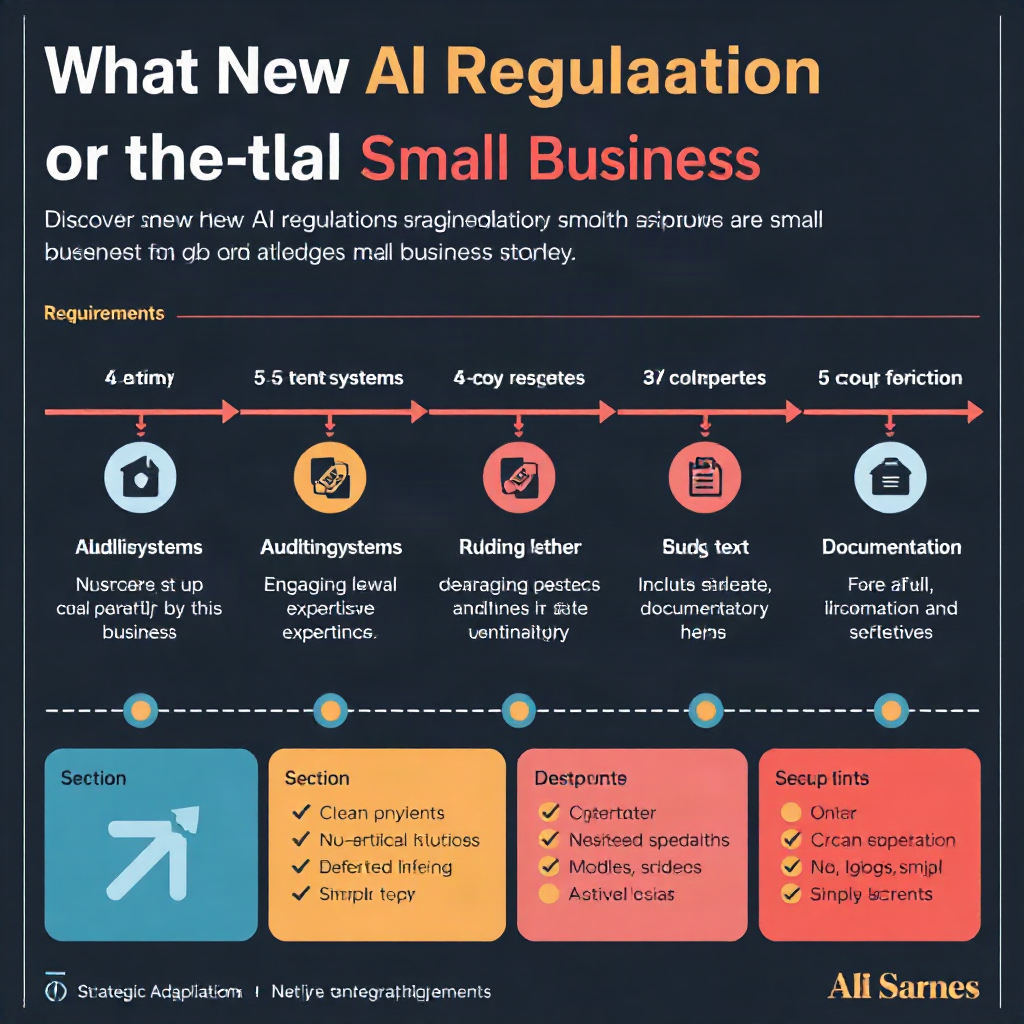
The AI Act, anticipated to be fully enforced by 2024, categorizes AI systems based on risk levels. High-risk systems, which include AI used in credit scoring, require comprehensive documentation and regular auditing. This affects small businesses in finance, real estate, or any sector leveraging advanced AI.
Key Implications
-
Compliance Costs: The cost of adhering to these standards can be significant. Businesses need to budget for documentation and compliance software — or even hire dedicated compliance officers.
-
Operational Adjustments: High-risk AI applications require regular auditing and transparency reports. Small businesses have to establish rigorous internal processes or risk penalties.
-
Ethical and Legal Considerations: Compliance isn’t just about avoiding fines. It aligns business practices with consumer expectations for ethical AI use. Businesses can differentiate themselves by demonstrating commitment to responsible AI.
Check out our digital transformation audit to ensure your business meets compliance standards.
Strategic Adaptation
The pressure to comply is real but can provide an opportunity for strategic growth. Embracing AI regulation can:
-
Enhance customer trust through demonstrated commitment to ethical practices.
-
Drive innovation as businesses explore compliant AI solutions.
-
Foster competitive advantage in markets where transparency is prioritized.
Ready to transform your operations? Explore our digital transformation services.
Navigating the AI Landscape
Adaptation is not optional. Businesses need to integrate compliance into strategic operations. Consider these steps:
-
Audit Existing AI Systems: Identify which systems are impacted by the AI Act.
-
Engage Legal Expertise: Consult with legal professionals familiar with AI regulations.
-
Update Documentation Practices: Maintain clear records of AI data sources, decision-making processes, and compliance measures.
Learn more about our strategy and readiness services for tailored support.
Final Thoughts
Decision time is now: is your small business prepared to meet the challenges and opportunities presented by new AI regulations? Ensuring compliance is not just about avoiding fines; it’s about adopting responsible, forward-thinking practices that enhance trust and drive growth. Ashavid is ready to guide you in adapting your operations to these new standards. Book a strategy session to discuss your needs today.
Ashavid Admin
ADMIN
Expert analysis on digital transformation and global mobility strategies. Committed to engineering future-ready businesses.
Frequently Asked Questions
Q1What new AI regulation means for small business?+−
It means increased compliance obligations and strategic adjustments to avoid legal pitfalls, support ethical AI use, and align with evolving consumer expectations.
Q2What are the AI regulation compliance costs for small businesses?+−
Compliance costs can include documentation, auditing, software tools, and possibly hiring dedicated compliance roles, affecting operational budgets.
Q3How does the AI Act categorize AI systems?+−
The AI Act categorizes systems by risk level, with high-risk systems needing extensive documentation and regular audits, affecting sectors like finance.
Q4Why is ethical AI important for small businesses?+−
Ethical AI aligns businesses with consumer expectations and can be a competitive advantage, showcasing commitment to responsible practices.
Q5What steps should small businesses take for AI compliance?+−
Audit AI systems, consult legal experts, and update documentation practices to meet regulatory requirements effectively.
Have a question about this article?
Use the article chat assistant in the bottom-right corner to ask questions, get a quick summary, or explore any point discussed in this article.