



Executive Brief
Understanding JavaScript SEO Rendering Problems
JavaScript SEO rendering problems occur when search engines struggle to index content that JavaScript dynamically generates. This affects how web pages appear in search results, impacting their visibility. Understanding these issues and implementing strategies like server-side rendering (SSR) could significantly enhance your site’s SEO.
The Reality of JavaScript and SEO
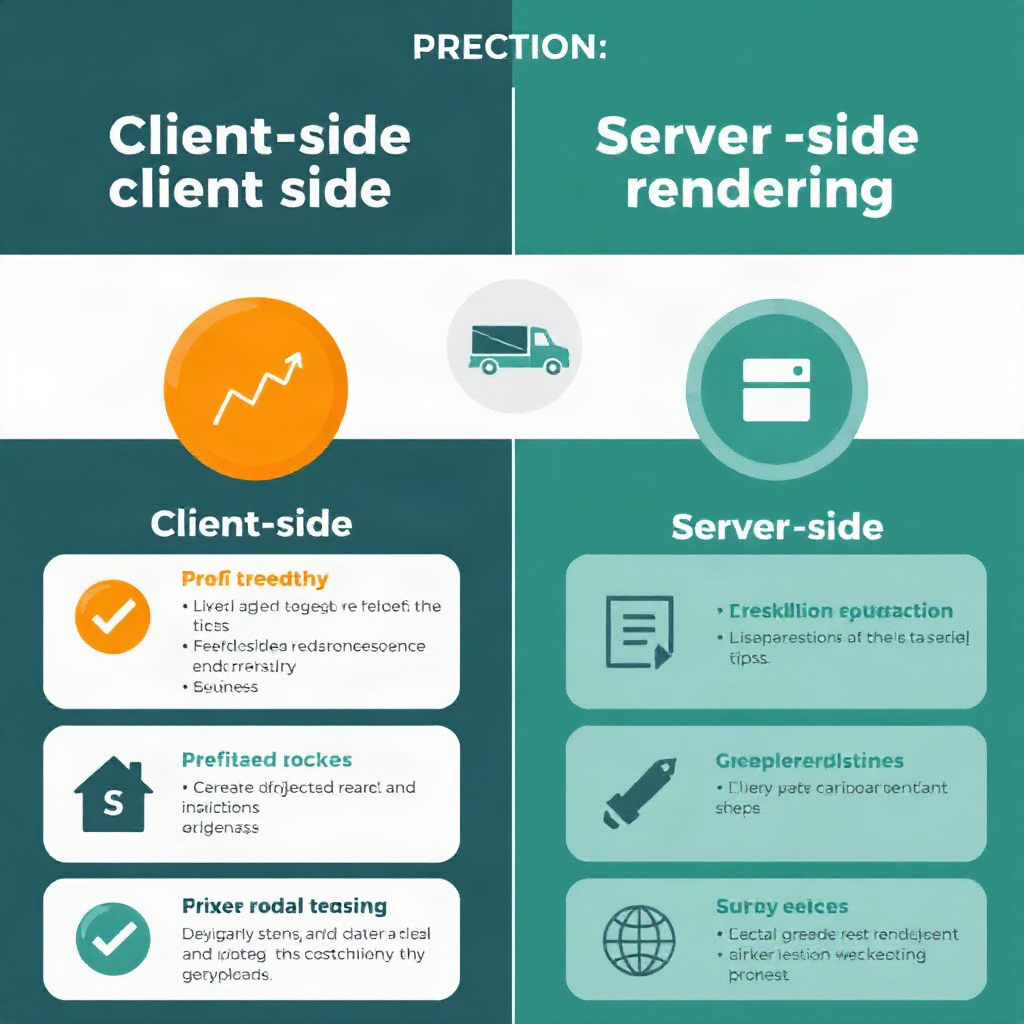
In 2022, nearly 93% of websites utilized JavaScript, making it a dominant player in web functionality. However, this reliance brings a significant challenge: when content is dynamically rendered by JavaScript, search engines often face difficulties indexing it. For non-technical founders, this might seem like a minor detail, but it can drastically affect search rankings and visibility.
Why It Matters
-
Visibility Impact: Pages dependent on JavaScript may not be rendered correctly by search engines, making critical content invisible in search results.
-
Performance: A site with inefficient client-side rendering could suffer from slower loading times, further affecting SEO and user experience.
Explore our comprehensive services to enhance digital presence growth here.
Client-Side Rendering vs. Server-Side Rendering

Client-Side Rendering (CSR)
In CSR, JavaScript is executed in the browser, which means that search engines must also execute JavaScript to access the content. Googlebot and other search engines are improving in this area, but limitations remain.
- Challenges: Content may not be crawled effectively due to rendering issues, leading to incomplete indexing.
Server-Side Rendering (SSR)
With SSR, content is rendered on the server before it is delivered to the client. This approach usually results in better SEO as it allows search engines to access fully rendered content.
- Advantages: Reduces rendering workload on search engines and often improves page load time.
To learn more, book a strategy session with our experts.
Hybrid Solutions: The Best of Both Worlds
Isomorphic Applications
These apps use a combination of SSR and CSR. They render the initial page on the server, while subsequent interactions occur via CSR. This approach provides both speed and SEO benefits.
- Use Case: Great for dynamic applications where initial load speed and SEO are priorities.
Pre-rendering
Tools such as Prerender.io can be employed to serve static HTML to search engines, effectively addressing rendering issues without altering the client’s experience.
- Benefit: Often easier to implement on existing client-side applications.
For detailed solutions, see our product development services.
Real Trade-Offs: What Needs Consideration
When choosing between CSR and SSR, it's crucial to consider factors like development complexity, application needs, and ongoing maintenance. SSR often requires more server resources and expert handling, while CSR may sacrifice SEO if not handled correctly.
- Practical Decision-Making: Consider workloads, user interaction needs, and SEO importance before choosing a path.
For further insights, schedule an audit to assess your digital transformation readiness.
Closing Thoughts
Choosing the right rendering approach depends on your business goals, site needs, and resource capabilities. For founders looking to optimize their web presence, understanding and addressing JavaScript SEO rendering problems is crucial for achieving the desired visibility and growth.
If you are considering a strategic investment in optimizing your website’s performance, Ashavid offers expert guidance and practical solutions tailored to your unique needs. Explore our full range of services.
Ashavid Admin
ADMIN
Expert analysis on digital transformation and global mobility strategies. Committed to engineering future-ready businesses.
Frequently Asked Questions
Q1What are JavaScript SEO rendering problems?+−
These problems occur when search engines struggle to index content dynamically generated by JavaScript, affecting visibility in search results.
Q2How does client-side rendering affect SEO?+−
Client-side rendering may cause incomplete indexing by search engines, as content is rendered in the browser rather than on the server.
Q3What is server-side rendering (SSR)?+−
SSR involves rendering content on the server before delivering it to the client, enhancing SEO by providing fully rendered content to search engines.
Q4What is the hybrid approach to rendering?+−
Hybrid solutions like isomorphic apps and pre-rendering combine SSR and CSR benefits, improving both speed and SEO effectiveness.
Q5Why is understanding rendering important for founders?+−
Selecting the right rendering approach affects a website's SEO performance, loading speed, and overall user experience, impacting business success.
Have a question about this article?
Use the article chat assistant in the bottom-right corner to ask questions, get a quick summary, or explore any point discussed in this article.