

Executive Brief
Grasping Cybersecurity Threats for Small Business
In 2022, nearly 43% of cyber attacks targeted small businesses, revealing a pressing need for robust security measures. Small businesses often assume they aren’t at risk, yet they're prime targets due to potentially weaker defenses.
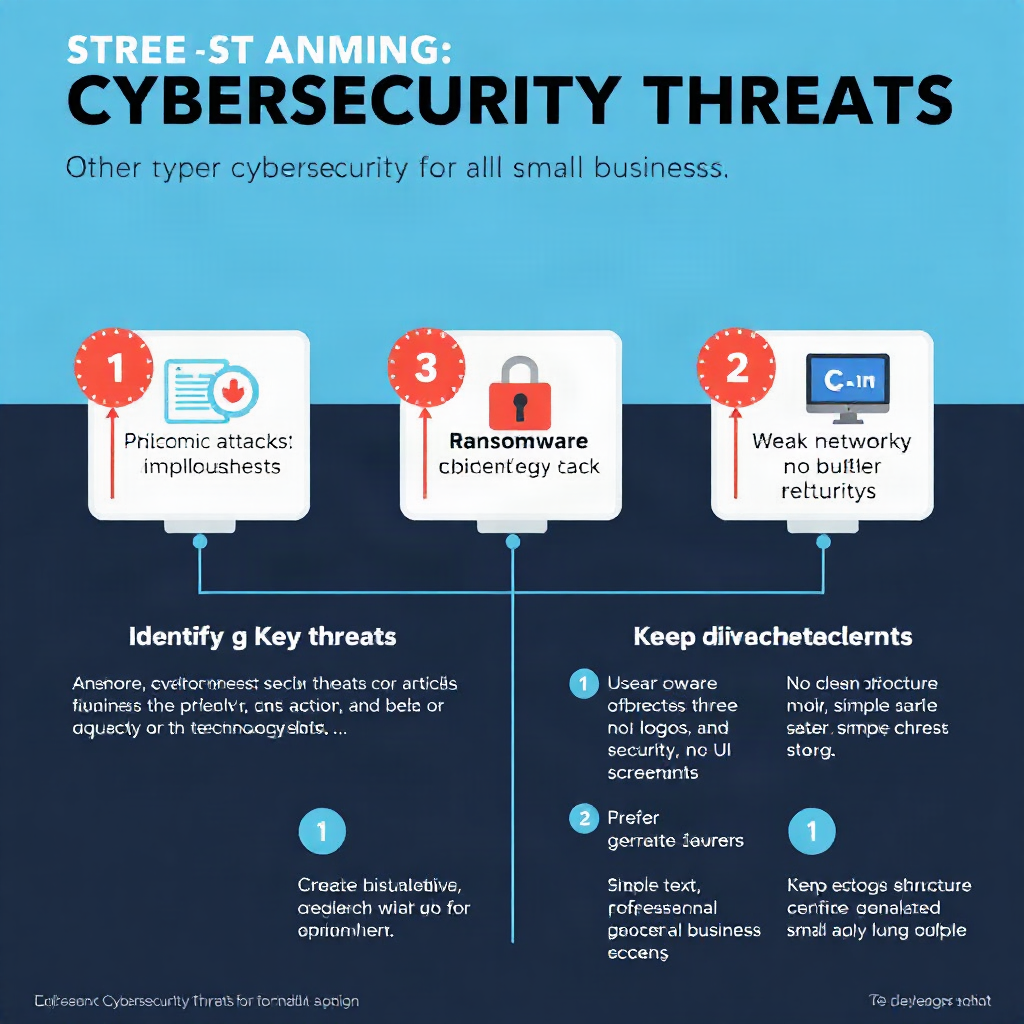
Identifying Key Threats
Understanding the threats faced by small businesses is crucial for building defensive strategies:
-
Phishing Attacks: Deceptive emails and messages designed to steal sensitive information.
-
Ransomware: Malicious software encrypts data until a ransom is paid, crippling operations.
-
Weak Network Security: Open or inadequately secured networks expose sensitive data.
Tension: Limited Resources vs. Rising Threats
The smaller operational scale often means limited cybersecurity budgets. This creates tension as small enterprises face sophisticated threats while lacking the resources for high-end security solutions.
What Cybersecurity is NOT
Cybersecurity is not merely an IT issue. It's a foundational business strategy. Protecting data involves more than firewalls—it's about promoting a culture of awareness and vigilance.
The Practical Approach
- Assess Your Vulnerabilities: Conduct regular audits. The digital transformation readiness audit can pinpoint areas needing fortification.
- Educate Employees: Implement training on recognizing phishing attempts and secure practices.
- Invest in Basic Protections: Even small businesses can implement effective solutions—multi-factor authentication and network encryption are cost-effective basics.
Mechanism Behind Robust Cybersecurity
Effective cybersecurity strategies hinge on a combination of technology and human awareness—a robust defense is dynamic and evolves with emerging threats.
Decisive Action for Small Business Owners
To protect your business, start by assessing current vulnerabilities and incorporate an active training program for your team. If you're seeking tailored support, consider booking a strategy session with experts—begin by visiting our Digital Transformation and Operations Performance services.
Explore how mentorship can aid in navigating these challenges through our Startups Mentorship program. For more insights on securing your business, visit our full service menu or book a strategy session.
Ashavid Admin
ADMIN
Expert analysis on digital transformation and global mobility strategies. Committed to engineering future-ready businesses.
Frequently Asked Questions
Q1What are common cybersecurity threats for small businesses?+−
Common threats include phishing attacks, ransomware, and weak network security, leading to data breaches and financial losses.
Q2Why are small businesses targeted by cybercriminals?+−
Small businesses are often targeted due to weaker defenses and less robust security measures compared to larger corporations.
Q3How can small businesses prevent phishing attacks?+−
Training employees to recognize suspicious messages and implementing email filtering technologies can greatly reduce phishing risks.
Q4What is ransomware and how does it affect businesses?+−
Ransomware locks business data until a ransom is paid, disrupting operations and leading to significant financial loss.
Q5How can I improve my small business's network security?+−
Network security can be improved by using multi-factor authentication, encrypting data transfers, and regularly updating security protocols.
Have a question about this article?
Use the article chat assistant in the bottom-right corner to ask questions, get a quick summary, or explore any point discussed in this article.