


Executive Brief
Understanding the Cost of Training Staff to Use AI Tools
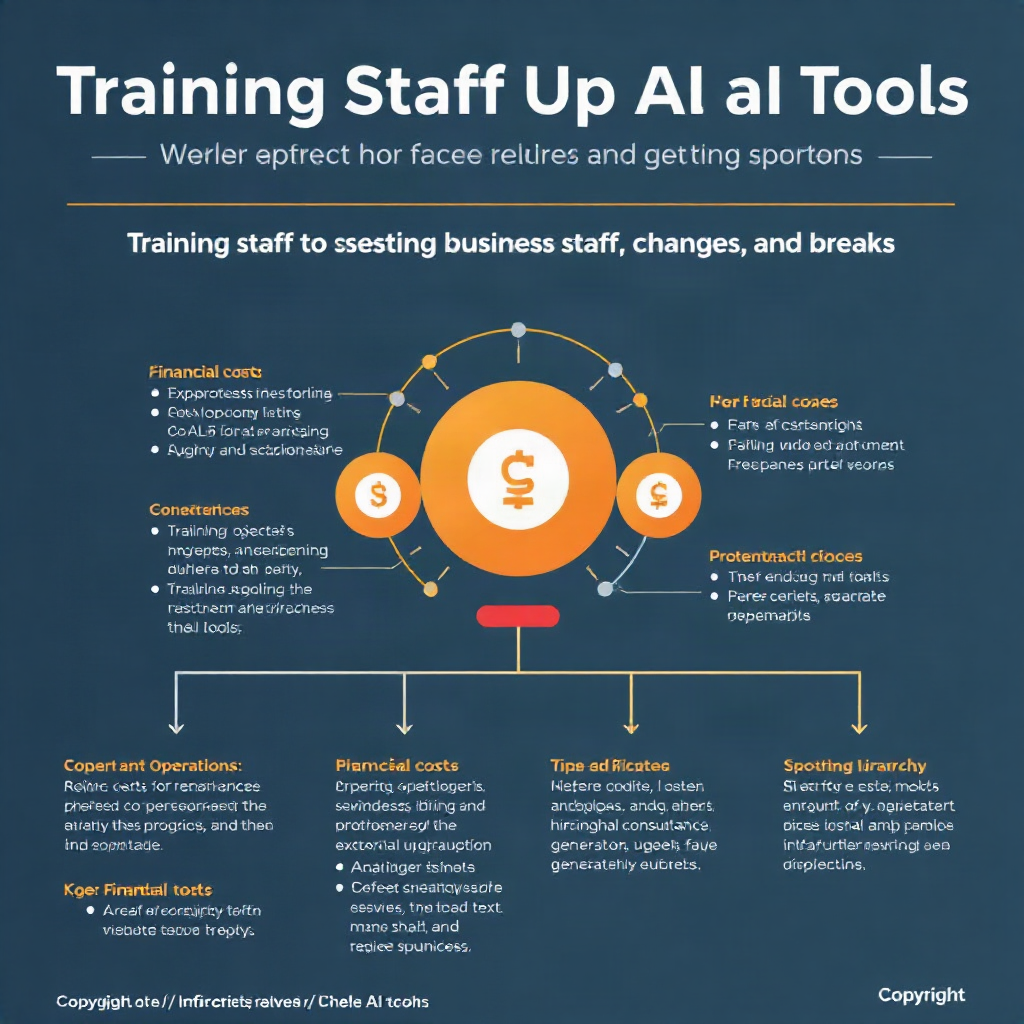
Adoption of AI tools in a business isn't just a tech upgrade—it's a cultural shift. As of 2023, 85% of small and medium-sized enterprises (SMEs) reported some difficulty in staff adaptation to AI applications. Mainly, the investment involves three elements: financial cost, time investment, and organizational change.
Financial Costs
It's not just about purchasing the software. Training costs can include:
-
Development Programs: Courses and workshops can range from $500 to $5,000 per employee depending on depth and duration.
-
External Consultants: Hiring specialists to guide implementation can cost anywhere from $10,000 to $50,000 annually.
-
Infrastructure Upgrades: Ensuring your existing tech infrastructure can support new AI tools might involve additional investments.
Explore our full service menu for tailored support.
Time Investment
AI integration isn't instant. Training staff can take several months. Factors include:
-
Duration of Training: Depending on complexity, expect 20 to 100 hours of training per employee.
-
Learning Curve: Employees might need ongoing support adapting AI outputs into daily workflows.
Automation readiness assessments, such as our digital transformation readiness audit, can forecast timelines effectively.
Organizational Changes
Introducing AI tools isn't a patch—it's a remodel:
-
Process Overhauls: AI-driven workflows often necessitate redesigning existing processes.
-
Role Redefinition: AI can automate routine tasks, leading to role evolution rather than elimination.
Check our digital transformation services for strategic support.
Navigating Change Management and AI Adoption Resistance

Resistance usually stems from fear of the unknown. Studies from 2023 indicate that 40% of staff at SMEs initially resist AI-driven changes, especially when they're unclear on its impact.
Building Trust
-
Transparency: Clearly articulate what AI will and won't do—avoid the fear of job displacement with factual communication.
-
Involvement: Engage staff in the decision-making process to improve acceptance.
Training Strategy
Combine formal education with real-world applications. Consider:
-
Hands-on Workshops: Allow team members to interact directly with AI tools under guided supervision.
-
Mentorship and Support Systems: Establish AI ambassadors within teams to provide peer-to-peer guidance.
What AI Integration Breaks: Identifying the Pitfalls
Failing to adequately train staff can lead to three major pitfalls:
- Data Misinterpretation: Without proper understanding, employees might draw erroneous insights.
- Over-reliance Without Verification: Teams might trust AI blindly—quality control remains paramount.
- Misaligned Expectations: If AI capabilities are oversold, the resulting disappointment can undermine trust.
For effective implementation, consider a strategy readiness assessment.
Decision Time: Assess Your Readiness
Deciding whether your business is ready for AI hinges on understanding its true costs and potential disruptions. Evaluate whether your team has the skillset and mindset for new tools. If you're ready to take the next step, consider Ashavid's digital transformation readiness audit.
Ashavid Admin
ADMIN
Expert analysis on digital transformation and global mobility strategies. Committed to engineering future-ready businesses.
Frequently Asked Questions
Q1What is the first step in training staff to use AI tools?+−
Begin by assessing your team's current skill level and identifying specific gaps. Tailor training programs to match these needs.
Q2How can businesses overcome resistance to AI adoption?+−
Foster transparency by communicating AI's benefits and limitations. Involve employees in the process and offer continuous support.
Q3What are common pitfalls of implementing AI without proper training?+−
Misinterpretation of data, over-reliance without verification, and misaligned expectations can compromise outcomes.
Q4How long does it typically take to train staff on AI tools?+−
Training can take from 20 to 100 hours per employee, influenced by the complexity of the tools and the industry context.
Q5What ongoing support is necessary after training?+−
Offer continual learning opportunities and peer mentorship to integrate AI tools effectively into daily workflows.
Have a question about this article?
Use the article chat assistant in the bottom-right corner to ask questions, get a quick summary, or explore any point discussed in this article.