


Executive Brief
Understanding the Real Costs of Automation
Automation isn't a silver bullet—it's an investment. As of 2023, businesses are spending over $198 billion annually on automation technologies. Yet, not all these expenditures yield the expected returns. Before diving into automation, it’s crucial to understand what you'll gain, what you'll lose, and what's required for a successful implementation.
The Key to Measuring Automation ROI
Measuring automation ROI involves assessing both tangible and intangible benefits. Tangible savings include reduction in labor costs and error rates, while intangibles might be enhanced customer satisfaction or improved employee morale.
Here's what to focus on:
-
Cost Savings: Direct reductions in operational costs.
-
Productivity Gains: Increased output from the same resources.
-
Error Reduction: Fewer mistakes leading to savings and efficiency.
-
Quality Improvements: Enhanced product and service quality.
Understand these elements deeply to analyze if automation fulfills its promise.
Calculating the Payback Period
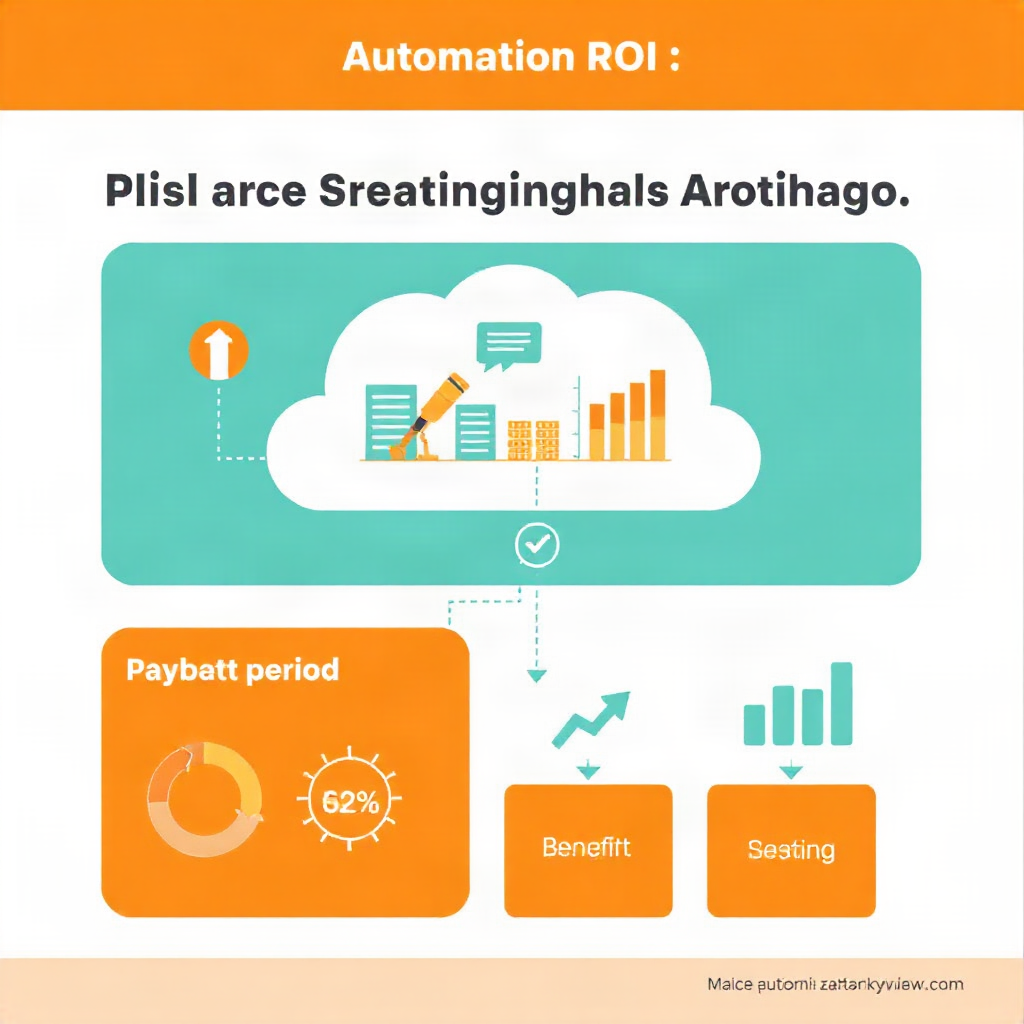
The automation payback period is the time it takes for the savings generated by automation to cover its costs. Here's a simplified calculation:
- Total Costs: Sum up all costs related to acquiring and implementing automation.
- Annual Benefits: Estimate the yearly savings and income enhancements from automation.
- Payback Period: Divide the total costs by annual benefits to find the time needed to recoup the investment.
This calculation is fundamental for evaluating the financial viability of automation projects.
Concrete Examples of Automation Benefits
-
30-Person Firm: Previously running two conflicting systems, switched to an integrated automated solution, reducing discrepancies by 85%.
-
E-commerce Platform Improvement: Reduced order processing time from 1.4 seconds to 0.3 seconds per transaction.
These examples highlight practical gains from automation.
Risks and Trade-offs
Every automation project comes with trade-offs. Let's examine some potential pitfalls:
-
Job Displacement: While automation can enhance efficiency, it may reduce the need for certain roles.
-
Upfront Costs: Initial investments can be substantial, affecting cash flow.
-
Integration Issues: Adding new systems to your existing infrastructure can be complex.
To tackle these risks effectively, businesses should consider a digital transformation readiness audit to assess their current standing.
Real-World Case Study Insights
Review our case studies to see how businesses like yours have successfully navigated the automation journey.
Making Informed Decisions
Ultimately, the decision to implement automation should be strategic and data-driven. An AI and automation service could aid in setting clear metrics and benchmarks.
For detailed analysis, consider utilizing our cost calculator to determine potential ROI specific to your circumstances.
Next Steps
If you're exploring automation, start with a strategy session. This step ensures a clearer picture of what follows and how Ashavid can support your transition to a more automated future.
Be informed. Be prepared. Ashavid is ready to guide you through the complexities of automation.

Ashavid Admin
ADMIN
Expert analysis on digital transformation and global mobility strategies. Committed to engineering future-ready businesses.
Frequently Asked Questions
Q1What factors affect automation ROI?+−
Automation ROI is affected by upfront costs, productivity gains, error reduction, and quality improvements. Evaluating these helps in determining overall efficiency.
Q2How do I calculate the payback period for automation?+−
To calculate the payback period, divide the total cost of automation by the annual financial benefits it generates. This gives you the time needed to recover the investment.
Q3What are the risks of automation?+−
Key risks include job displacement, high upfront costs, and integration challenges. Assessing these beforehand can mitigate issues.
Q4What should I do before implementing automation?+−
Conduct a readiness audit to evaluate your current digital infrastructure and strategic goals. This helps in identifying the right automation paths.
Q5Why should I consider Ashavid for automation?+−
Ashavid offers strategic insight and practical support for automation projects, helping businesses navigate complexity and maximize ROI.
Have a question about this article?
Use the article chat assistant in the bottom-right corner to ask questions, get a quick summary, or explore any point discussed in this article.