


Executive Brief
Cracking the Code of MVP Development for Startups
In 2022, 90% of startups faced failure due to misjudged product-market fit, emphasizing the importance of a Minimum Viable Product (MVP). MVP development isn't just about building a tiny version of what you envision. It's about identifying and implementing the core functionality that validates your concept in real-world scenarios.
The Tension: Simplicity vs. Functionality
Creating an MVP demands a delicate balance between simplicity and functionality. Striking this balance involves tough decisions on which features to include and which to postpone. The aim is to test the hypothesis without overextending resources — not just creating a smaller but meaningful product.
What MVP Development Is NOT
An MVP should not be a half-hearted attempt at a full product. It is not a feature-rich solution that tries to do everything at once. It's about focusing strictly on the necessary elements and understanding that iteration will follow. Many founders fall into the trap of building a 'lite version' that's essentially a diluted vision of their final product. Instead, define critical components that represent the core value proposition.
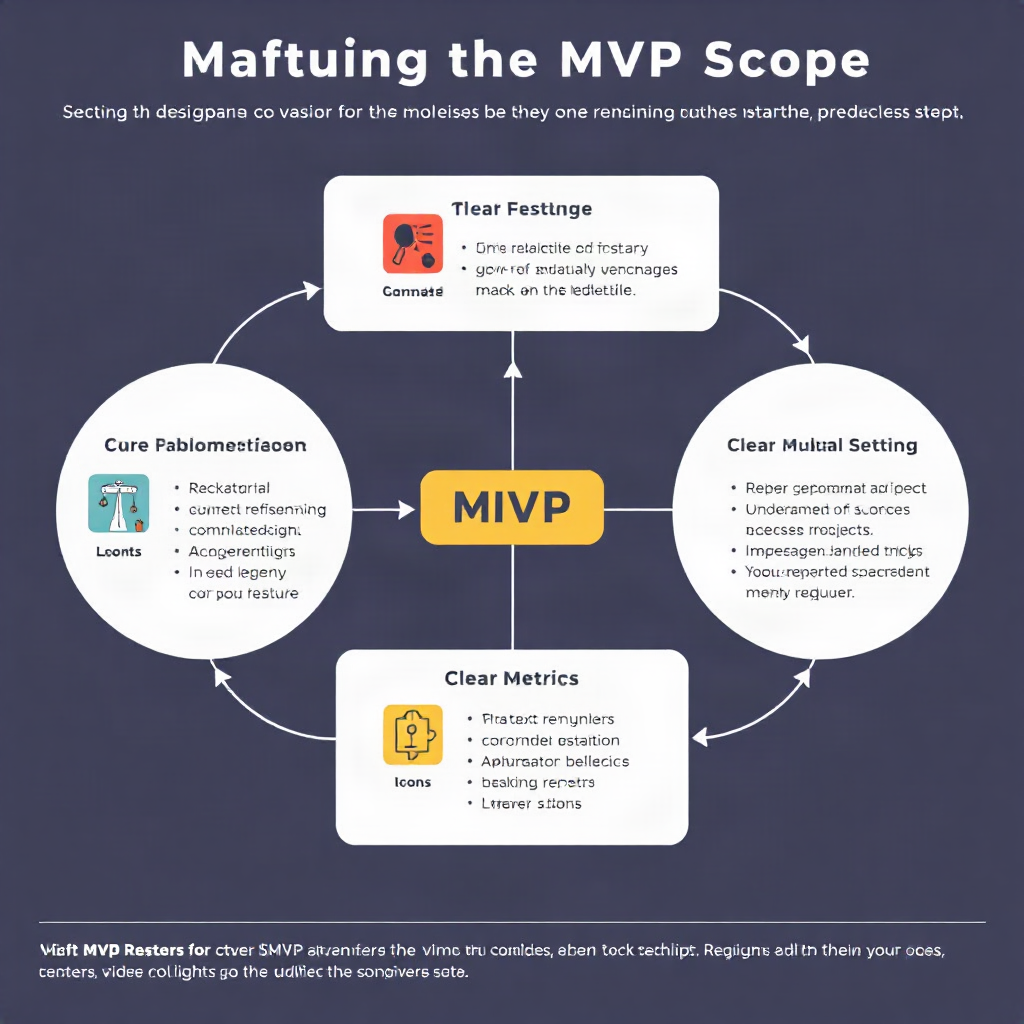
Defining the MVP Scope: What to Build First
-
Identify the Core Problem: What exactly are you solving? A focused problem statement leads to an effective MVP.
-
Draft User Stories: Understand user needs and behaviors by creating scenarios that illustrate how they will interact with your product.
-
Prioritize Features: Use a Kano Model to segregate features into must-haves, performance features, and delighters.
-
Set Clear Metrics: Decide on key performance indicators (KPIs) that will help you measure success and learning.
A Comparison of Approaches
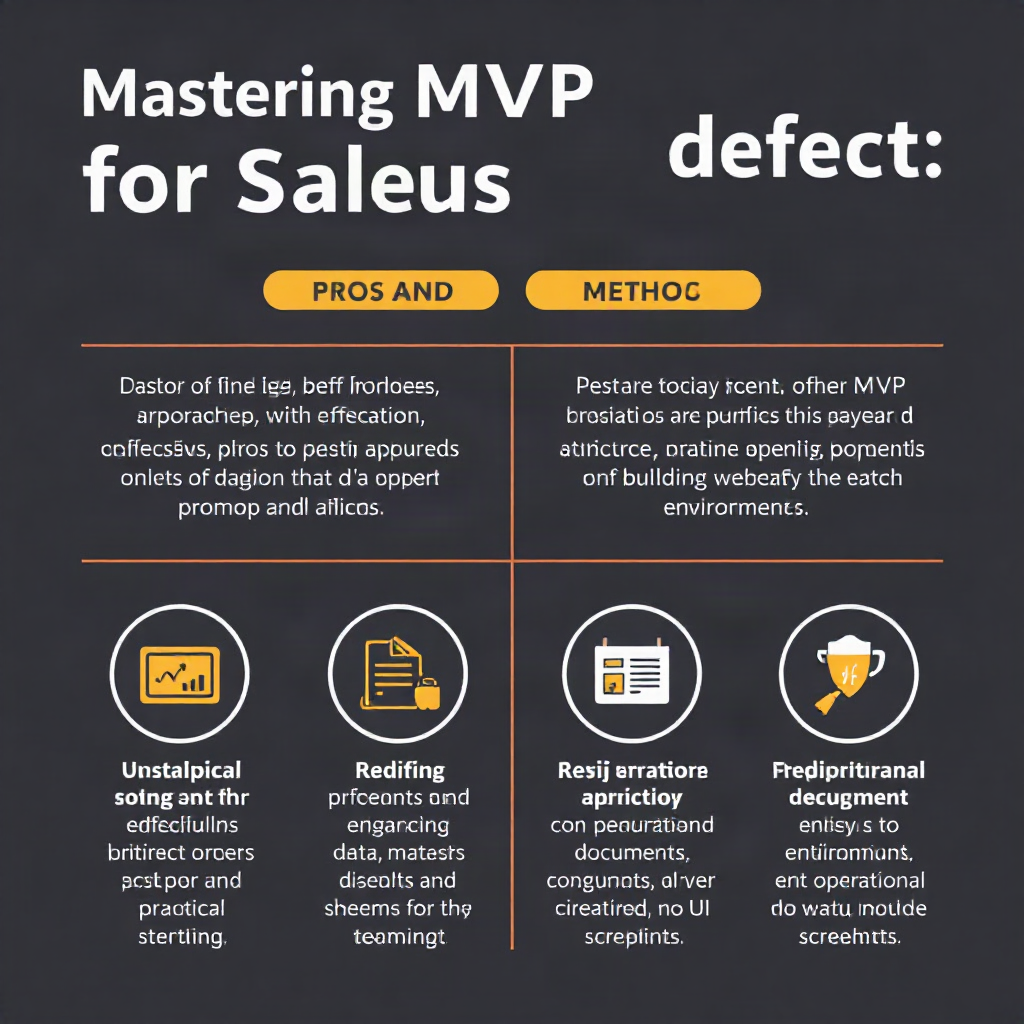
| Approach | Pros | Cons |
|---|---|---|
| Wizard of Oz MVP | Rapid validation | High manual workload |
| Concierge MVP | Deep customer insights | Limited scalability |
| Prototype | Visual and practical feedback | May not capture complexities |
| Single-feature MVP | Fast market testing | Limited user engagement scope |
Iteration: The True Power of an MVP
Once your MVP is live, gather data and feedback continually. This continuous loop of develop, test, and iterate is crucial for refining features and enhancing user experience. Regular auditing of your digital presence helps, as outlined in our website and digital audit services.
Risks and Trade-Offs
-
Over-Engineering: Avoid excessive zeal in fine-tuning elements that aren't core.
-
Ignoring Feedback: Data-driven decisions are pivotal. Ignoring market feedback can lead to obsolescence.
-
Resource Allocation: Misjudging time and financial resources can derail the process. Evaluate costs using our cost calculator.
Next Steps: Moving Beyond the MVP
After validating your MVP, it's time to scale your product. Engage in strategic expansion with our product development services tailored for startups.
Remember, MVP development is a testing ground. Use the insights to refine your next steps and ensure sustainable growth. To explore your tailored MVP pathway, book a strategy session with our experts today.
Ashavid Admin
ADMIN
Expert analysis on digital transformation and global mobility strategies. Committed to engineering future-ready businesses.
Frequently Asked Questions
Q1What is MVP development for startups?+−
MVP development for startups involves creating the simplest version of a product that showcases core features, enabling early user testing and feedback collection.
Q2What should be included in an MVP?+−
An MVP should include only the essential features that solve the core problem your product addresses, validated by user stories and prioritized using models like the Kano Model.
Q3Why is feedback crucial in MVP development?+−
Feedback allows you to understand how users interact with your product, highlighting areas for improvement and confirming the product's market fit.
Q4How can over-engineering be avoided in an MVP?+−
Focus on core functionalities only, and delay adding new features until they are validated by user needs and feedback.
Q5What are common approaches to building an MVP?+−
Common approaches include Wizard of Oz MVPs, Concierge MVPs, Prototypes, and Single-feature MVPs. Each has unique pros and cons depending on the startup's goals and resources.
Have a question about this article?
Use the article chat assistant in the bottom-right corner to ask questions, get a quick summary, or explore any point discussed in this article.