



Executive Brief
Do I Need a Mobile App or a Website?
In 2022, small to medium-sized enterprises spent an average of $150,000 on app development. But, do you need a mobile app or a website to achieve your business goals? Deciding between the two depends on your audience’s needs, your budget, and the functionality you require.
Understanding the Core Differences
-
Websites are accessible from any device with a browser and require no downloads. They offer wide reach and lower development costs.
-
Mobile Apps provide a more personal user experience with offline capabilities and can leverage native functionalities like GPS and camera.
Key Tradeoffs: Cost, Reach, and Engagement
Building a mobile app typically involves higher costs. For instance, as of 2023, a simple app can start at $30,000 while complex apps exceed $300,000. Websites generally cost less, ranging from $5,000 to $30,000 for small businesses.
-
Cost Efficiency: Websites win if budget is a primary concern.
-
Global Access: Websites provide broader reach without needing updates across different platforms.
-
User Engagement: Apps can increase engagement through push notifications and offline access.
PWA vs. Native App
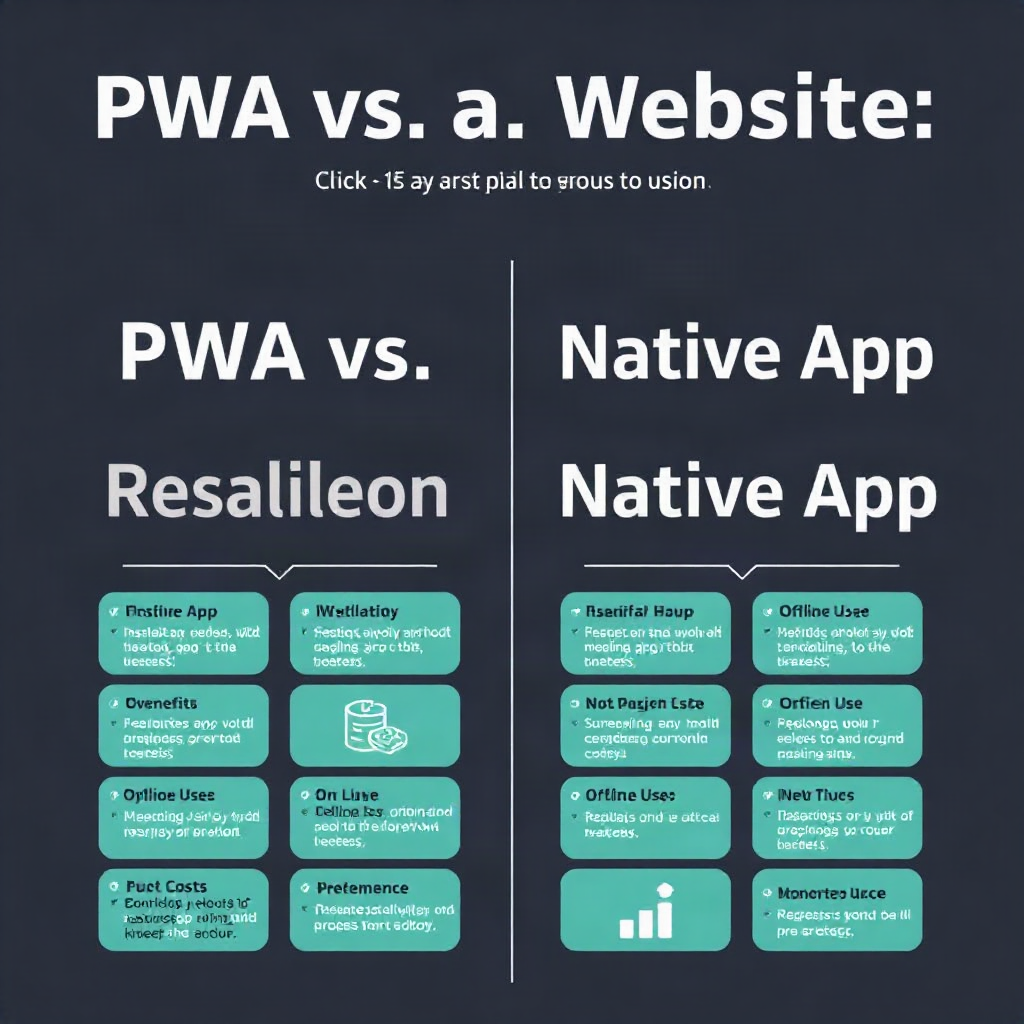
Progressive Web Apps (PWAs) are a hybrid—offering app-like interactions with the accessibility of a website.
Example Comparison:
| Feature | Native App | PWA |
|---|---|---|
| Installation | From App Stores | Via Web |
| Offline Use | Yes | Yes |
| Cost | High | Moderate |
| Maintenance | Complex | Simplified |
Decision Point: PWAs save on maintenance and can reach users faster, while native apps offer deeper integration.
Real-World Scenario
Consider a retail business aiming for digital presence. A website expands visibility globally, which is crucial for marketing and e-commerce. To boost customer retention, a mobile app provides personalized experiences and direct notifications. If there’s a need for quick updates and budget constraints exist, a PWA could balance these needs efficiently.
Next Steps
- Evaluate Your Goals: Define the problem you're solving. Check if real-time data and offline functionality are vital.
- Budget Assessment: Calculate potential investment and ongoing costs with our cost calculator.
- Consult with Experts: Analyze digital strategy options with our digital transformation services.
Conclusion
The choice between a mobile app and a website should align with your business objectives, audience expectations, and resource availability. For tailored solutions, consider an audit to understand your specific needs and path forward.
Ashavid is here to help you decide the right digital strategy. If you're ready to explore or refine your approach, book a strategy session today.

Ashavid Admin
ADMIN
Expert analysis on digital transformation and global mobility strategies. Committed to engineering future-ready businesses.
Frequently Asked Questions
Q1What are the pros and cons of a mobile app?+−
Mobile apps offer better user engagement and offline capabilities but can be costly to develop and maintain. They require installation and frequent updates for performance.
Q2How does a PWA differ from a website?+−
A PWA combines the reach of a website with the performance of an app, enabling offline use and engaging user experiences without a store download.
Q3What factors should I consider before building an app?+−
Consider user needs, budget, desired features, the necessity of offline capabilities, and integration with native features like camera or GPS.
Q4How does cost differ between websites and apps?+−
Websites typically cost between $5,000 and $30,000, while mobile apps range from $30,000 to $300,000, depending on complexity.
Q5What's the best starting point for digital transformation?+−
Begin with an understanding of your current digital presence and potential gaps. Ashavid offers a digital transformation readiness audit to guide initial steps.
Have a question about this article?
Use the article chat assistant in the bottom-right corner to ask questions, get a quick summary, or explore any point discussed in this article.