



Executive Brief
Introduction: The Canadian Startup Landscape
Currently, there are over 1.2 million small businesses in Canada. Each has navigated provincial regulations, financial backing requirements, and operational challenges. For newcomers or first-time founders, understanding how to craft a business plan for a Canadian startup is crucial to transforming ideas into viable ventures.
Understanding Your Audience: What Banks and Investors Need
44% of small businesses fail within the first five years, often due to poor planning. Banks and investors review business plans critically to gauge the viability and risk. Your plan should differentiate by providing:
-
Market specifics: Detail customer segmentation and competitive landscape.
-
Financial projections: Offer transparent assumptions and realistic figures.
[Learn more about optimizing these projections in our financial projections startup guide.]
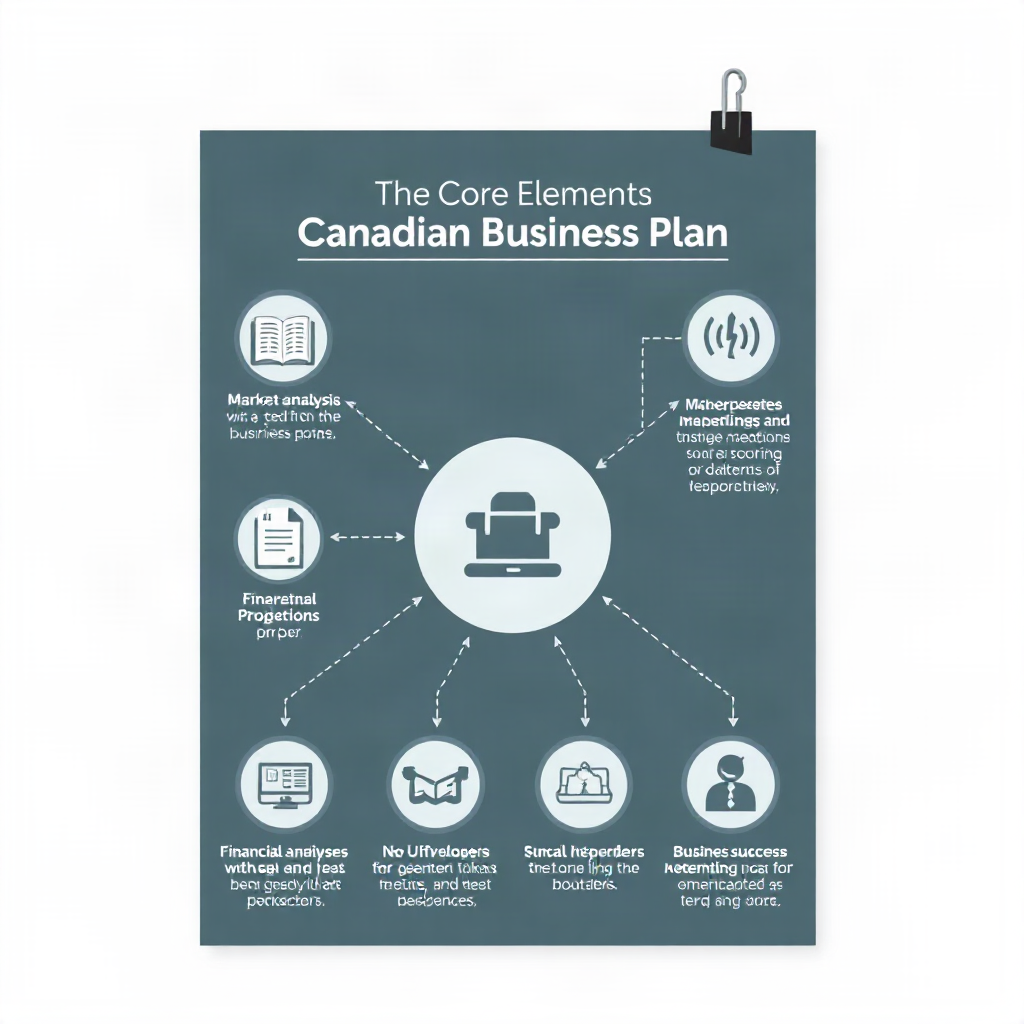
The Core Elements of a Canadian Business Plan
1. Executive Summary
Focus on clarity—this section should summarize your mission and vision clearly and briefly.
What it is not: A vague overview of your idea. Ensure it includes explicit, measurable goals.
2. Business Description
Detail your structure (e.g., LLC, Corporation) and unique selling propositions. Regulatory considerations are key, especially since requirements can vary by province.
3. Market Analysis
Leverage specific Canadian market data and economic indicators. This section must acknowledge trade-offs, like market saturation versus a niche opportunity.
4. Organization and Management
Clearly outline who does what. Mention key players and advisory board members—real people with credentials, not placeholders.
Visit our one-on-one mentorship program for further support.
5. Service or Product Line
Describe the lifecycle of your product/service, its IP portfolio, and anticipated regulatory hurdles.
6. Marketing and Sales Strategy
Instead of general goals like "enhance customer engagement," use actionable steps:
-
Targeting specific channels for engagement (e.g. LinkedIn for B2B)
-
Setting quantifiable objectives, such as "30% increase in lead conversion within 6 months."
7. Funding Request
Be precise: State the amount of funding needed, its specific use, and anticipated outcomes. Articulate why this funding source aligns with your business structure.
[Explore provincial funding options through our Provincial Nominee entrepreneur streams.]
8. Financial Projections
Include three-year forecasts with backups for assumptions. Stress-test scenarios for market downturns and regulatory shifts.
Financial Table Example:
| Year | Revenue | Profit Margin |
|---|---|---|
| Year 1 | $500,000 | 15% |
| Year 2 | $750,000 | 18% |
| Year 3 | $1,000,000 | 22% |
For detailed assistance, consider a digital audit of your financial readiness.
Operational Recommendations
There’s more to a business plan than text. Implementation demands operational dexterity:
-
Adapt strategies dynamically to feedback and data
-
Prioritize technology that scales with your operations
[Our digital transformation services offer tailored support for scaling operations.]
Conclusion: Taking the Next Step with Ashavid
Crafting a business plan is only the start. Success in Canada requires effective execution and adjustments as data and markets change. If you're ready to embark on this journey, Ashavid's experience in strategy readiness can guide you efficiently.
Final Decision
Assess where your plan stands today. If you're prepared to advance, book a consultation with Ashavid's experts to ensure your operational execution matches your strategic ambitions. Schedule your strategy session now.

Ashavid Admin
ADMIN
Expert analysis on digital transformation and global mobility strategies. Committed to engineering future-ready businesses.
Frequently Asked Questions
Q1What is a business plan for a Canadian startup?+−
It's a document detailing your business objectives, market research, financial projections, and strategies. Essential for securing funding, it guides operational success.
Q2Why are financial projections necessary in a business plan?+−
Financial projections demonstrate your understanding of the business's monetary needs and potential profitability. They help investors assess viability and manage risk.
Q3How do I prepare a business plan for Canadian banks?+−
Focus on detailed market analysis, clear financial projections, and compliance with provincial regulations. Banks require specificity and evidence of realistic planning.
Q4What sections should I include in a business plan?+−
Include an executive summary, business description, market analysis, organization details, product/service information, marketing strategy, funding requests, and financial projections.
Q5How can Ashavid assist with my startup?+−
Ashavid offers mentorship, operational performance services, digital transformation, and strategy readiness assessments to aid in startup growth and success in Canada.
Have a question about this article?
Use the article chat assistant in the bottom-right corner to ask questions, get a quick summary, or explore any point discussed in this article.