


Executive Brief
Understanding Automation for Professional Services Firms
By 2022, over 50% of professional services offices in North America had introduced some form of automation into their operations. However, what truly matters is not the adoption rate, but how these technologies impact cost, change processes, and inevitably—what they break.
The Real Tension: Cost vs. Benefit
Implementing automation carries an unmistakable cost-benefit tension. Initial setup might require substantial investment in new technology and training. For example, a law firm might spend upwards of $100,000 integrating AI to manage document review. However, what are often overlooked are the long-term savings—both in time and operational costs—that eventually outweigh the initial outlay.
More Than Translating Tasks: Rethinking Workflows
Automation isn’t just about translating existing tasks into digital equivalents. It's about redesigning workflows entirely. For instance, a clinic employing AI for appointment scheduling must consider not only the algorithm's accuracy but also how patient engagement and staff roles will evolve. Effective automation demands a shift in mindset—a digital transformation rather than mere digitization.
Discover our full range of services in digital transformation.
What Automation Is Not
Automation for professional services isn’t a plug-and-play quick fix. It’s not merely about replacing human effort with technology. Consider a firm implementing case management AI: without the correct training, the tool is as good as paperweights. Effective automation requires continuous adaptation and learning, not static solutions.
Breaking and Fixing: Structural Impacts
One clear result of automation is the structural change it creates. Systems must be designed to keep pace with evolving service models. A clinic might find that integrating patient management software breaks their current CRM. Understanding and anticipating these breakpoints is crucial—ensuring that fixes are part of the plan before they become problems.
Learn more about our AI and automation services.
Cost Analysis and Comparison
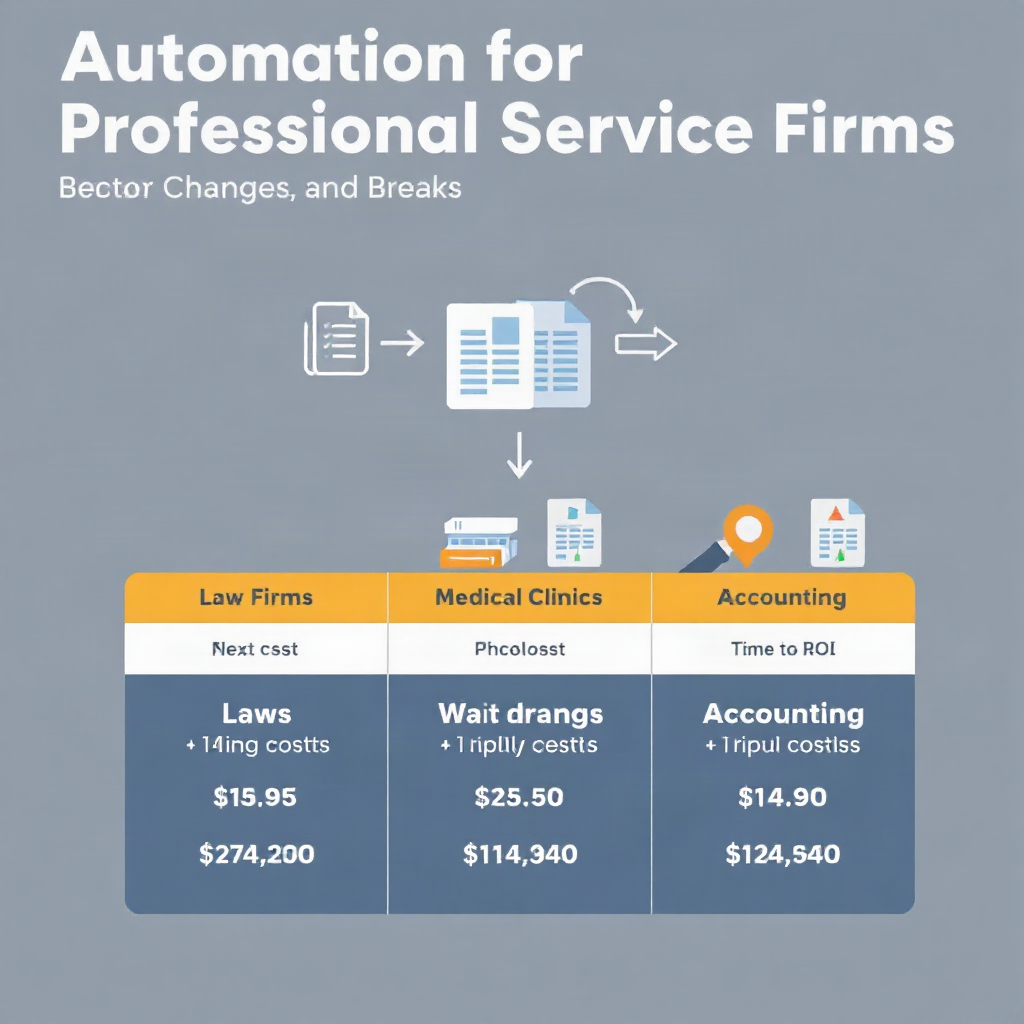
Let’s look at a practical comparison of automation costs across verticals:
| Sector | Initial Cost Estimate | Time to ROI |
|---|---|---|
| Law Firms | $50,000+ | 18 months |
| Medical Clinics | $40,000+ | 12 months |
| Accounting | $30,000+ | 10 months |
These figures showcase the variability in costs and potential returns, highlighting the necessity for tailored strategies for each vertical sector.
Preparing for the Next Step
Before diving into automation, firms must conduct a thorough digital transformation readiness audit. This audit helps identify gaps and predict changes before they disrupt operations. It's the essential first step toward ensuring a smooth transition and maximizing the benefits of automation.
Decision Time
Automation promises significant gains but requires a strategic, informed approach. By understanding specific needs, potential disruptions, and structural changes, firms can make educated decisions around AI integration. For tailored guidance, book a strategy session with us today. Embrace automation that truly works for your business, without losing control.

Ashavid Admin
ADMIN
Expert analysis on digital transformation and global mobility strategies. Committed to engineering future-ready businesses.
Frequently Asked Questions
Q1What is automation for professional services firms?+−
Automation involves using AI to streamline operations, improve efficiency, and enhance client satisfaction. It typically requires investment in technology and training.
Q2What are the typical costs involved in automating a law firm?+−
The initial cost for law firm automation can start at $50,000, covering technology integration and training. Long-term savings often justify these expenses.
Q3How does automation change workflows in professional services?+−
Automation reshapes workflows by requiring a reevaluation of roles and processes, emphasizing digital transformation rather than just digitizing existing tasks.
Q4What are some challenges of implementing automation?+−
Challenges include the initial cost, the need for training, potential disruption to existing systems, and adapting to structural changes in workflows.
Q5How can I prepare my firm for automation?+−
Conducting a digital transformation readiness audit is crucial. It helps identify gaps and predict disruptions before they occur, ensuring a smoother transition.
Have a question about this article?
Use the article chat assistant in the bottom-right corner to ask questions, get a quick summary, or explore any point discussed in this article.