


Executive Brief
Why Small Businesses Need AI Inventory Management

Recent studies show that small businesses waste up to $150 billion annually due to inventory inefficiencies. The problem isn't just excess stock but the inability to forecast demand accurately. This is where AI inventory management steps in, providing intelligent systems that help maintain optimal stock levels and enhance decision-making.
Key Benefits
-
Reduced Overstock and Stockouts: AI-driven systems predict demand with precision, cutting down both excess inventory and shortages.
-
Improved Timing: Algorithms assess lead times and consumption rates, ensuring timely stock replenishment.
-
Efficient Cash Flow: By maintaining accurate inventory levels, businesses can better manage cash flow.
The Real Costs of AI Inventory Management
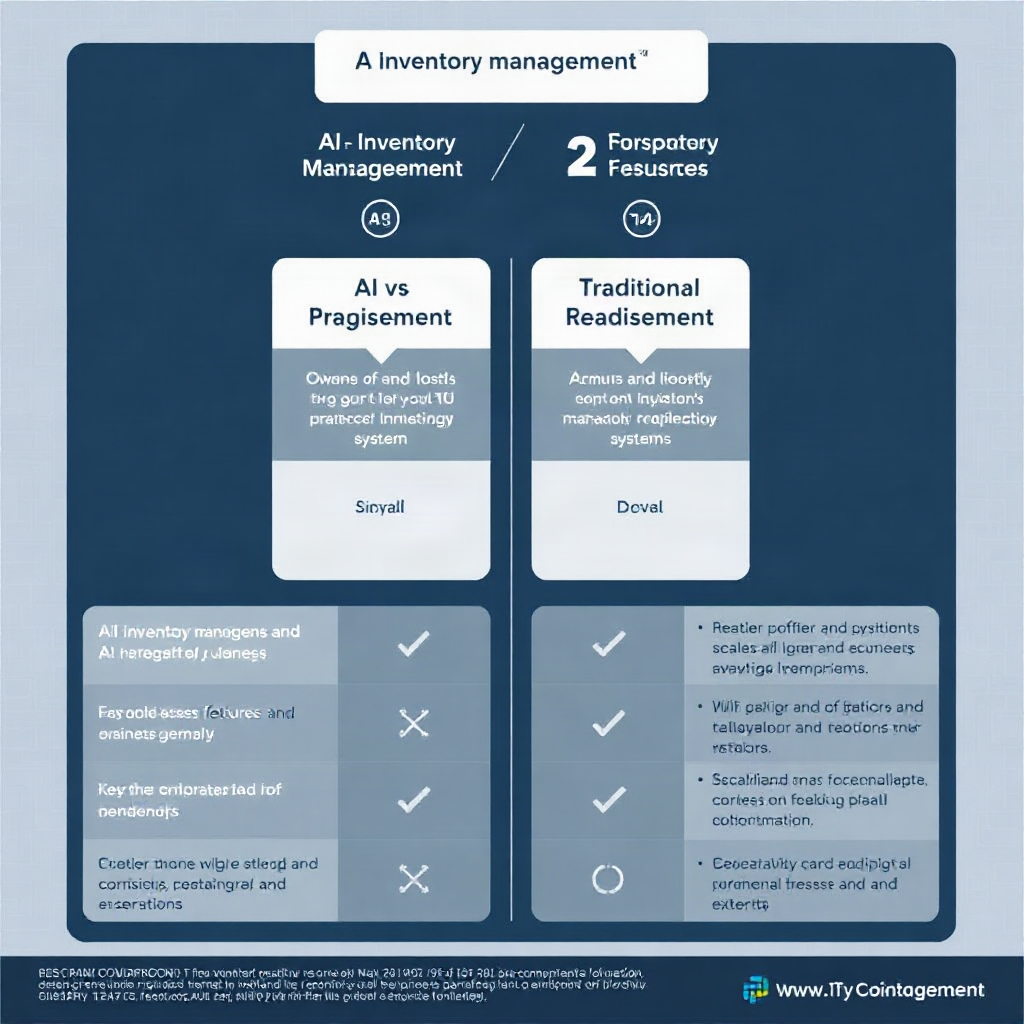
Understanding what AI inventory management for small business involves is crucial before commitment. Here are the primary costs you should consider:
-
Implementation Costs: Customizing and integrating AI solutions into existing systems. Costs vary depending on the complexity of your current setup.
-
Maintenance and Support: Ongoing technical support and updates are essential for keeping systems efficient and secure.
-
Training: Ensuring your team understands and utilizes the new technology effectively.
Comparison Table: AI vs. Traditional Systems
| Feature | Traditional Systems | AI Inventory Management |
|---|---|---|
| Forecast Accuracy | Basic | Advanced (Predictive) |
| Cost | Lower initial | Higher initial |
| Scalability | Limited | Highly scalable |
| Data Handling | Manual | Automated |
What Changes with AI Integration?
Implementing AI doesn't simply upgrade your system; it transforms your operation. Key changes include:
-
Data-Driven Decision Making: Transitioning from reliance on gut feeling to decisions backed by data analytics.
-
Vendor Management: Automation of reorder processes, improving supplier relationships through consistent order cycles.
-
Customer Satisfaction: Enhanced availability of popular products improves customer experience and loyalty.
The Hidden Breakpoints
Every technology comes with its risks and AI is no different. The breakpoints include:
-
Data Dependency: AI requires large datasets to function accurately. Limited data restricts the effectiveness of predictions.
-
System Integration Challenges: Compatibility issues with existing IT frameworks can disrupt operations during implementation.
-
Employee Adaptation: Resistance to change from staff accustomed to traditional methods is a common barrier.
When to Consider a Readiness Audit
Before diving into AI inventory management, a readiness audit—examining all operational facets and current technological capabilities—is vital.
-
Evaluate Current Systems: Understanding the strengths and weaknesses of your current infrastructure.
-
Identify Training Needs: Determining what level of training your team requires to maximize technology use.
-
Assess Financial Impact: Calculating the ROI and overall cost implications of technology adoption.
Ashavid specializes in conducting thorough digital transformation readiness audits to guide you in this transition.
Making the Decision
Integrating AI into your inventory management isn't just a technological step; it's a strategic one. Seeing the potential for better demand forecasting and supply optimization requires a solid assessment of your current state and goals. For those ready to take the step, Ashavid offers comprehensive AI and automation services to support every phase of your digital journey.
To delve deeper into how AI can transform your business operations, book a strategy session today.
Ashavid Admin
ADMIN
Expert analysis on digital transformation and global mobility strategies. Committed to engineering future-ready businesses.
Frequently Asked Questions
Q1What is AI inventory management for small businesses?+−
AI inventory management uses artificial intelligence to streamline stock control and improve demand forecasting, reducing waste and enhancing decision-making for small businesses.
Q2How does AI improve inventory management?+−
AI enhances inventory management by predicting demand accurately, optimizing stock levels, reducing overstock, minimizing stockouts, and automating reorder processes.
Q3Are there any hidden costs in implementing AI for inventory management?+−
Yes, hidden costs include integration challenges, ongoing maintenance, technical support, and required training for staff to effectively use new systems.
Q4What are the risks of AI in inventory management?+−
Risks include data dependency, integration issues with existing systems, and employee resistance to process changes.
Have a question about this article?
Use the article chat assistant in the bottom-right corner to ask questions, get a quick summary, or explore any point discussed in this article.