



Executive Brief
Ecommerce Platform Comparison: Navigating Canadian Options
When considering an ecommerce platform in Canada, one question surfaces: Which system truly supports your goals without hidden complexity? With platforms like Shopify, BigCommerce, and custom builds, the choice isn't just about features—it's about fitting the regulatory landscape.
Real Tension: Custom vs. Shopify
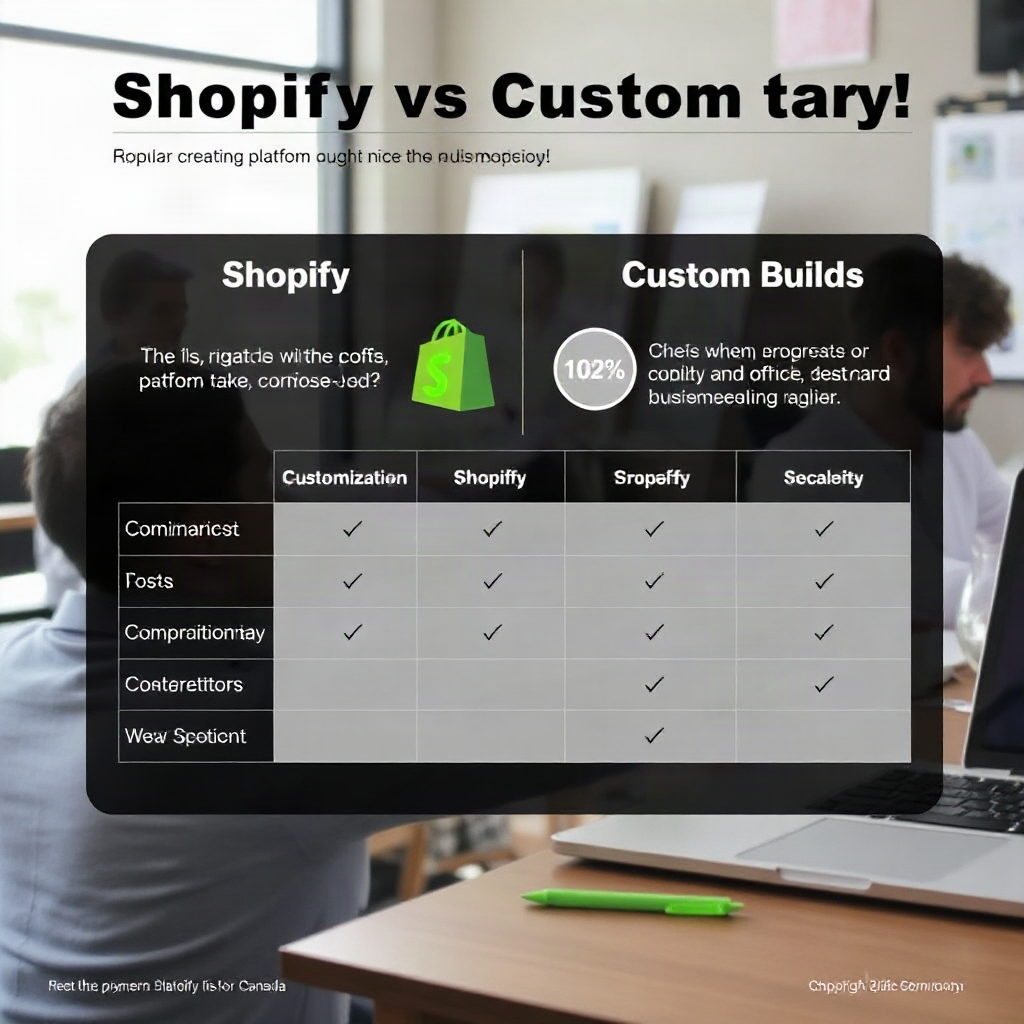
Custom projects promise flexibility. But they also bear the risk of complexity—and maintaining compliance with Canadian tax laws demands meticulous attention. Shopify simplifies many operational burdens but limits bespoke functionalities without costly apps.
A critical trade-off exists. Custom solutions offer tailored experiences at a premium cost, while platforms like Shopify reduce entry complexity but lock you into their ecosystem limits.
What These Platforms Are Not

-
Shopify is not a custom experience: It offers breadth, not depth, without significant app investments.
-
Custom solutions are not turnkey: They require continuous investment to maintain, particularly with evolving compliance requirements.
Hard Numbers Matter
Instead of saying "many Canadian businesses," consider this: In 2022, over 120,000 Canadian stores ran on Shopify. The stats show a clear preference, yet not all businesses thrive on standard offerings.
Ecommerce in Canada: Compliance and Costs
Understanding tax compliance in Canada—like GST/HST intricacies—is essential. As of January 2023, businesses must accurately manage tax across provinces, with fines for non-compliance—source: Canada Revenue Agency.
Canadian Tax and Shipping
-
Tax Handling: Ensure automatic updates to GST/HST rates per province.
-
Shipping Rules: Calculate rates accounting for Canadian geography and regulations.
Shopify vs. Custom Builds
| Feature | Shopify | Custom |
|---|---|---|
| Initial Cost | $29/month minimum | $10,000+ Development Fee |
| Compliance Ease | Built-in support for Canadian taxes | Custom integration needed |
| Scalability | High, with app integrations | Dependent on developer input |
For specific integrations, custom is unbeatable, but Shopify conquers quick-to-market needs.
Would You Choose a Hybrid?
Hybrid approaches, combining Shopify's reliable infrastructure with custom apps, offer a middle ground but demand strategic investments. Explore our service offerings for guidance.
Making the Decision
Consider your primary growth needs and existing resources. Schedule an audit with Ashavid to discern your path with clarity. When the decision aligns with your strategic aspirations, the right platform choice becomes clear—and Ashavid is here to help guide that decision.
Explore full service menu and connect with a strategist today.
FAQ
What are the key factors in an ecommerce platform comparison for Canada?
Consider tax compliance, shipping regulations, initial costs, scalability, and whether you need a custom or out-of-the-box solution.
How does Shopify handle Canadian taxes?
Shopify automates GST/HST rate updates across provinces, minimizing compliance efforts for businesses.
What's the main benefit of a custom ecommerce solution in Canada?
Customization offers flexibility to tailor every aspect of your store, ideal for complex needs but generally higher cost.
Is it expensive to start with Shopify in Canada?
Initial costs are manageable, with plans starting from $29/month, but advanced features may require additional apps.
How does Ashavid support ecommerce development?
Ashavid offers insights and support for choosing and implementing platforms, ensuring your digital presence is compliant and effective.
Ashavid Admin
ADMIN
Expert analysis on digital transformation and global mobility strategies. Committed to engineering future-ready businesses.
Have a question about this article?
Use the article chat assistant in the bottom-right corner to ask questions, get a quick summary, or explore any point discussed in this article.